LLM Visibility Report: What to Track in 2026
Learn what an LLM visibility report should track across ChatGPT, Perplexity, Google AI Overviews, citations, prompts, schema and crawl access.
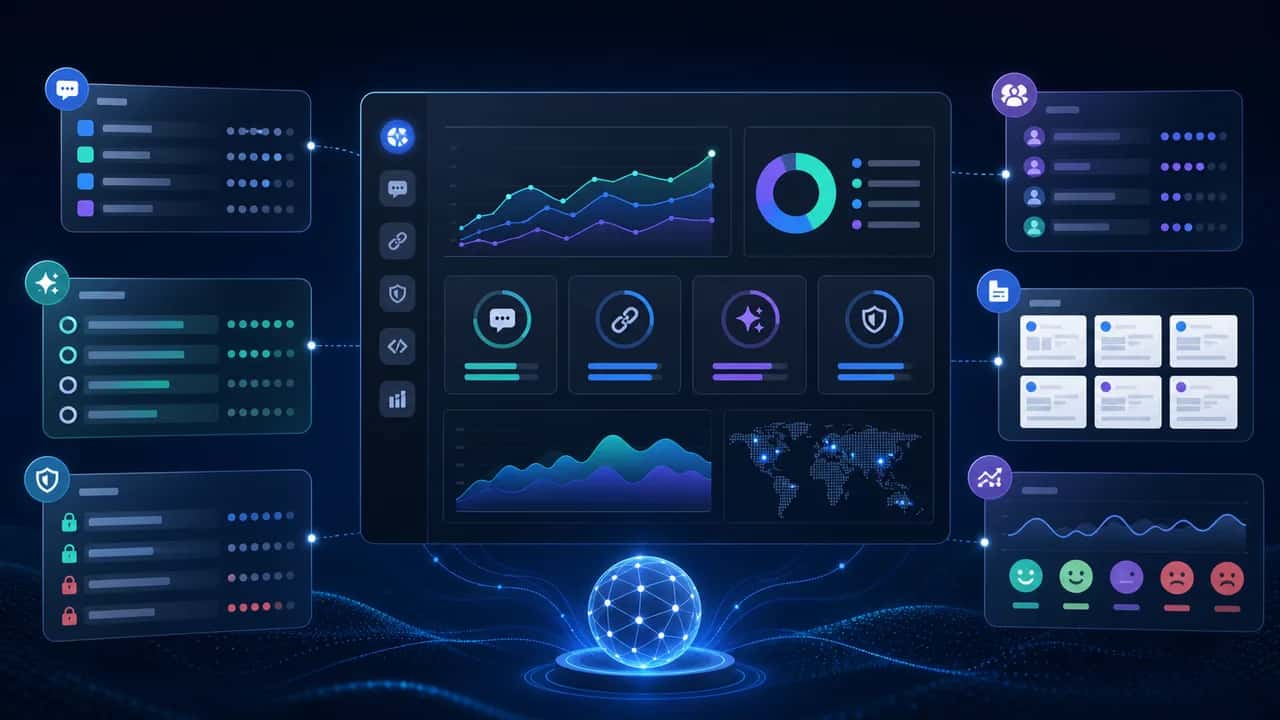
An LLM visibility report shows whether AI answer systems can find, understand, mention, and cite your brand when buyers ask category, comparison, and problem-solving questions. It is not a normal rank report with a new label. It needs prompts, citations, competitors, source URLs, entity clarity, and technical AI-readiness signals in one place.
The topic is moving fast. Google said on May 6, 2026 that AI Mode and AI Overviews are adding more direct links, source previews, public discussion perspectives, and query fan-out to find relevant sites across the web. That makes AI visibility reporting less about one ranking position and more about whether your site is the source AI systems can confidently use.
Short answer
A useful LLM visibility report should track five things: where your brand is mentioned, which URLs are cited, which competitors appear instead, which prompt groups trigger or miss your site, and which SEO/AEO/GEO fixes make your pages easier to crawl, verify, and cite.
Why LLM visibility reporting is different from SEO reporting
SEO reporting usually starts with indexed pages, rankings, impressions, clicks, CTR, technical issues, and conversions. Those still matter. Google says its SEO best practices remain relevant for AI features like AI Overviews and AI Mode in its AI features and your website documentation.
LLM visibility adds a different layer: the answer itself. A buyer may ask ChatGPT, Perplexity, Gemini, or Google AI Mode to shortlist tools, compare vendors, explain a problem, or recommend a next step. The report needs to show whether your brand appears in those answers, how it is described, whether the answer cites your site, and which competitors are being used as sources instead.
| Report area | Traditional SEO report | LLM visibility report |
|---|---|---|
| Visibility unit | Query, page, ranking position, impression | Prompt, answer, mention, citation, source URL |
| Competitors | Domains ranking above you | Brands named or cited when your brand is missing |
| Technical checks | Indexability, canonicals, speed, schema | Crawler access, llms.txt, schema, answer extraction, entity consistency |
| Outcome | More qualified clicks from search results | More accurate AI mentions, citations, and source inclusion |
What to include in an LLM visibility report
Competitor articles in this SERP are mostly tool roundups. That is useful for buying software, but a report has to answer a harder question: what changed, why did AI systems choose that source, and what should you fix next Use these sections as the baseline.
1. Prompt groups, not random one-off questions
Build repeatable prompt groups around how buyers actually research. For VisRank, useful groups would include "best SEO audit tool for a small business", "why does ChatGPT recommend my competitor", "how to check AI search visibility", and "tools for AEO and GEO". Each group should include several phrasings because LLM answers can vary by wording.
2. Mention share and answer role
Do not only count whether the brand appears. Record the role. Is it recommended, listed as an alternative, mentioned as a source, described incorrectly, or absent A brand that appears in a footnote is not performing the same as a brand recommended in the first sentence.
3. Citation URLs and source quality
For AI answers with citations, record the exact source URLs. If AI systems cite a comparison page, review, documentation page, forum thread, or old article instead of your canonical product page, that tells you what evidence the model can reach. Google also says it is improving links inside AI responses and source previews in its May 2026 AI Search update.
4. Competitor presence
Track which competitors appear when you do not. Then inspect the reason: do they have clearer category pages, stronger third-party mentions, better comparison content, more crawlable documentation, or fresher answer-first pages Our guide to why ChatGPT cites competitors explains this diagnostic pattern in more detail.
5. Crawl, schema, and llms.txt readiness
A visibility report should include the technical reasons an AI system might struggle to use your site. Check robots.txt, AI crawler access, canonical URLs, structured data, answer-first headings, author and date signals, and whether a useful llms.txt file exists at the site root. For schema basics, use Google's structured data documentation and Schema.org as your source of truth.
The metrics that matter most
Mention rate
How often your brand appears across the tested prompt set.
Citation rate
How often your own URLs are cited, not just your brand name.
Competitor substitution
Which brands appear when your brand is absent or described weakly.
Prompt coverage
Which buyer questions your site can answer and which ones have no supporting page.
Source accuracy
Whether AI systems describe your product, pricing, location, and category correctly.
Fix readiness
Whether schema, llms.txt, crawl access, entity pages, and answer blocks support citation.
How Google AI Mode changes the report
Google describes AI Mode as using techniques like query fan-out, where the system explores multiple related queries to find relevant sources. That means a single user prompt can touch several subtopics: definitions, comparisons, local context, product details, reviews, and practical steps. Your report should map those subtopics instead of treating the prompt as one flat keyword.
The practical implication is simple: if your site only has a generic product page, AI Mode may find competitors, listicles, forums, or documentation that answer the subquestions more clearly. The fix is not keyword stuffing. It is building pages and sections that answer specific buyer questions with clear entities, current facts, and crawlable proof. See our guide on how to optimize for AI search for the content structure side.
A simple LLM visibility report workflow
- Pick 20 to 50 prompts. Group them by buyer intent: category research, problem diagnosis, comparisons, alternatives, pricing questions, and local or SaaS-specific questions.
- Run the same prompts on a schedule. Weekly or monthly is more useful than a single screenshot because AI answers change.
- Record mentions, citations, and competitors. Keep the answer text, cited URLs, date, tool, and prompt variant.
- Audit source readiness. Use an AI Citation Readiness audit to check answer-first blocks, extractable formats, entity context, proof, llms.txt, and freshness.
- Prioritize fixes. Fix crawl blockers, missing schema, weak entity pages, and missing answer sections before writing more generic blog content.
- Rescan after publishing changes. A report is only useful when it turns into a measurable baseline and follow-up check.
Where VisRank fits
VisRank does not claim to control ChatGPT, Perplexity, Gemini, or Google AI Overviews. No tool can. What it can do is measure whether a page has the signals those systems need before they can confidently use it: crawl access, structured data, answer-first content, entity clarity, source proof, llms.txt discovery, freshness, and monitoring for regressions.
Start with the AEO checker for broad AI search readiness, then use the AI Citation audit when you need a closer look at citation-friendly content. If your report finds that AI systems mention competitors but not you, read why ChatGPT does not mention your business and check the deeper AEO signals most sites miss.
Quick FAQ
What is an LLM visibility report
It is a report that shows whether AI answer systems mention, cite, or accurately describe your brand for important prompts, plus the technical and content fixes that could improve that visibility.
How do you measure LLM visibility
Use repeatable prompts across AI tools, record mentions, citations, source URLs, competitor names, answer role, sentiment, and whether your pages are crawlable and easy to extract.
Do LLM visibility reports replace SEO reports
No. They sit beside SEO reports. Rankings, clicks, technical health, and indexability still matter, but AI reporting adds mentions, citations, prompt coverage, entity clarity, and zero-click visibility.
Can an LLM visibility report guarantee AI citations
No. It gives you a baseline and a fix list. AI systems choose sources algorithmically, so the honest goal is to remove blockers and make your pages easier to verify and cite.
Key takeaways
- An LLM visibility report tracks prompts, mentions, citations, competitors, source URLs, and AI-readiness blockers.
- SEO reports still matter, but they do not show whether AI systems recommend or cite your brand.
- Google AI Mode makes subtopic coverage more important because query fan-out can explore several related questions from one prompt.
- The best report ends with fix priorities: crawl access, schema, llms.txt, answer-first content, entity clarity, proof, and freshness.
- Do not promise guaranteed AI citations. Build a repeatable baseline, fix the blockers, and monitor movement over time.
Related articles
Check your website's SEO & AEO score
Free visibility audit - no signup required.
Scan my website for free