Shopify Collection Page SEO Checklist
Improve Shopify collection pages with unique titles, category copy, canonicals, internal links, and crawlable product grids.
Shopify SEO
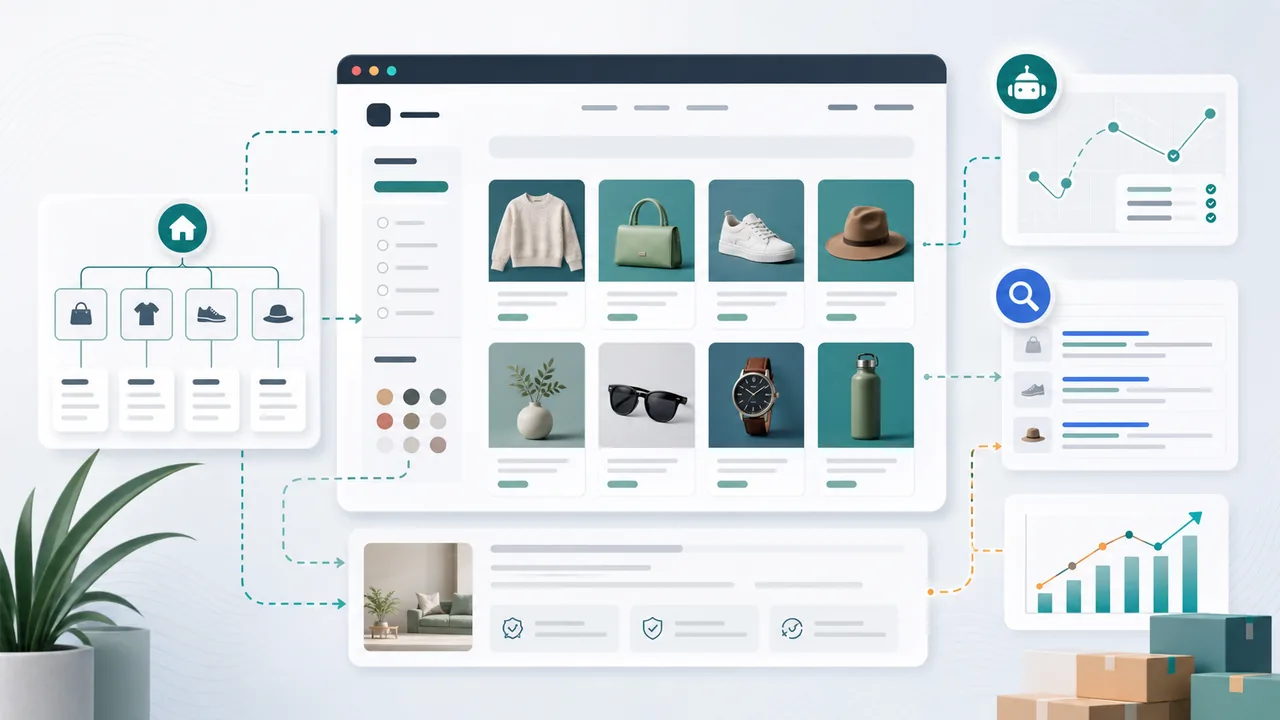
Shopify collection pages often rank for category intent such as "running shoes", "linen bedding", or "organic skincare". They need more than a product grid: Google needs unique category context, clear internal links, and stable technical signals.
Why this matters
A collection page is the bridge between informational discovery and product conversion. If it is thin, duplicated, or hard to crawl, the store loses long-tail category traffic even when product pages are strong.
If you want to see the issue on a real page, start with the related VisRank landing page: Audit a Shopify collection.
What to check first
- Unique title and meta description for each important collection.
- Visible category intro copy that answers buyer questions.
- Self-referencing canonical on indexable collections.
- Crawlable product links without script-only navigation.
- Links to related guides, subcollections, and best-selling products.
Fix priority
- Write 150-300 words of useful category copy for priority collections.
- Use FAQs for sizing, materials, shipping, compatibility, or selection criteria.
- Add internal links from blog guides to relevant collections.
- Noindex or consolidate collections that have no unique intent.
Common mistakes
- Using manufacturer copy on every category page.
- Indexing dozens of near-empty tag pages.
- Hiding all useful copy below an infinite product grid.
- Forgetting image alt text on category hero and product images.
Quick FAQ
How much copy should a Shopify collection page have
Enough to explain the category and answer buyer questions. For priority collections, a concise intro plus FAQ often works better than a long block of filler.
Should Shopify collections have FAQ schema
Yes, if the page visibly includes real collection-specific questions and answers. Keep answers concise and tied to buyer intent.
Next step
Run the relevant audit, fix the highest-impact blocker first, then rescan the page after deployment. That gives you a measurable baseline instead of a one-off checklist.
Related articles
Check your website's SEO & AEO score
Free visibility audit - no signup required.
Scan my website for free